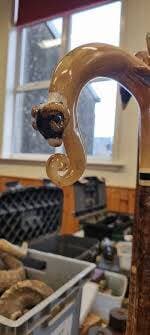
Shepherds Crooks
The classic crook shape, traditionally dressed from ram or buffalo horn on a hazel shank. Used by shepherds for centuries to catch sheep by the neck.
A short illustrated guide to stick types, the woods and horns we use, and the slow business of turning a cut branch into a stick somebody will walk with for decades.
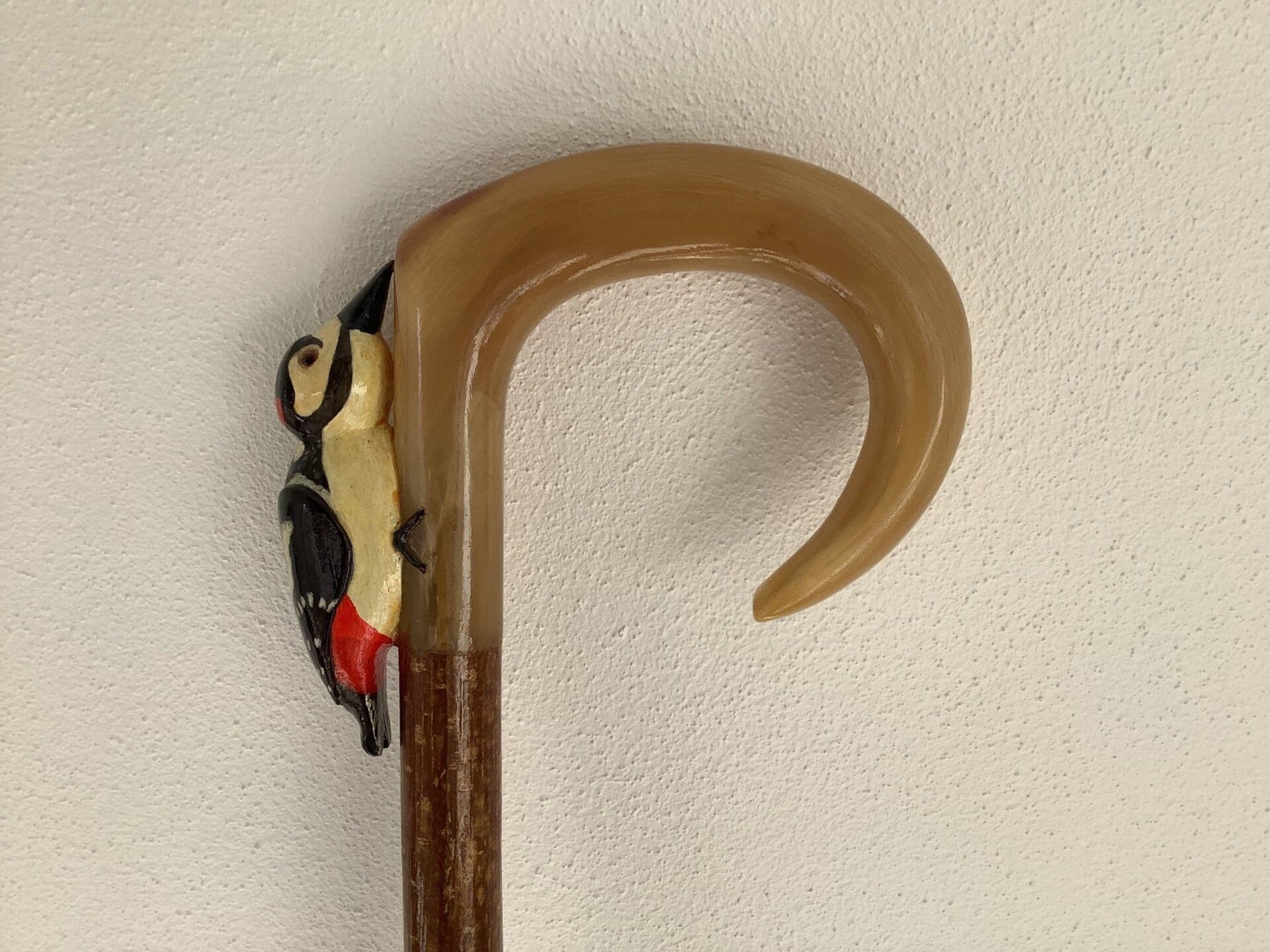
Every finished stick is built from four components, each with its own materials and techniques.
Handle
The head - horn, antler, or carved wood. The part your hand knows.
Collar
The metal or horn ring that marries handle to shank.
Shank
The length - hazel, holly, chestnut, or ash. Seasoned and straightened.
Ferrule
The tip - brass or rubber - where the stick meets the ground.
Walking sticks come in more shapes than most people realise. Here are the traditional forms we make.
The classic crook shape, traditionally dressed from ram or buffalo horn on a hazel shank. Used by shepherds for centuries to catch sheep by the neck.
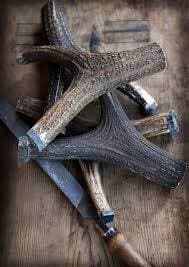
A V-shaped head that sits between thumb and forefinger. Popular with walkers, shooters, and country folk. Often made with a natural fork or horn V.
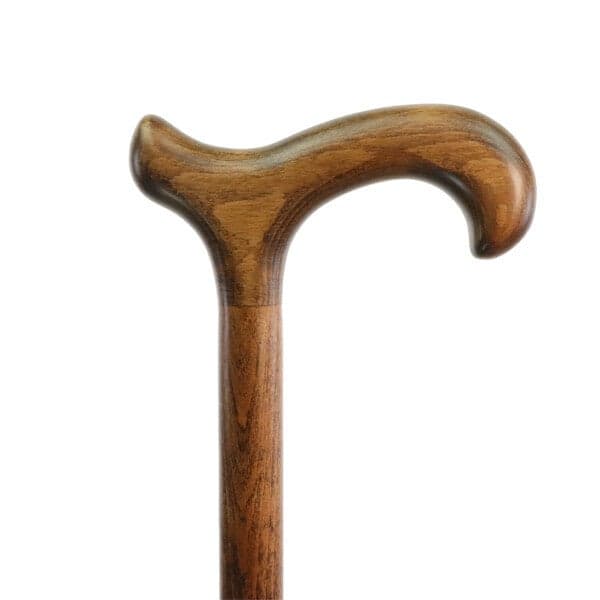
The curved derby handle — elegant, comfortable, and easy to hook over an arm. A classic gentleman's walking stick shape.
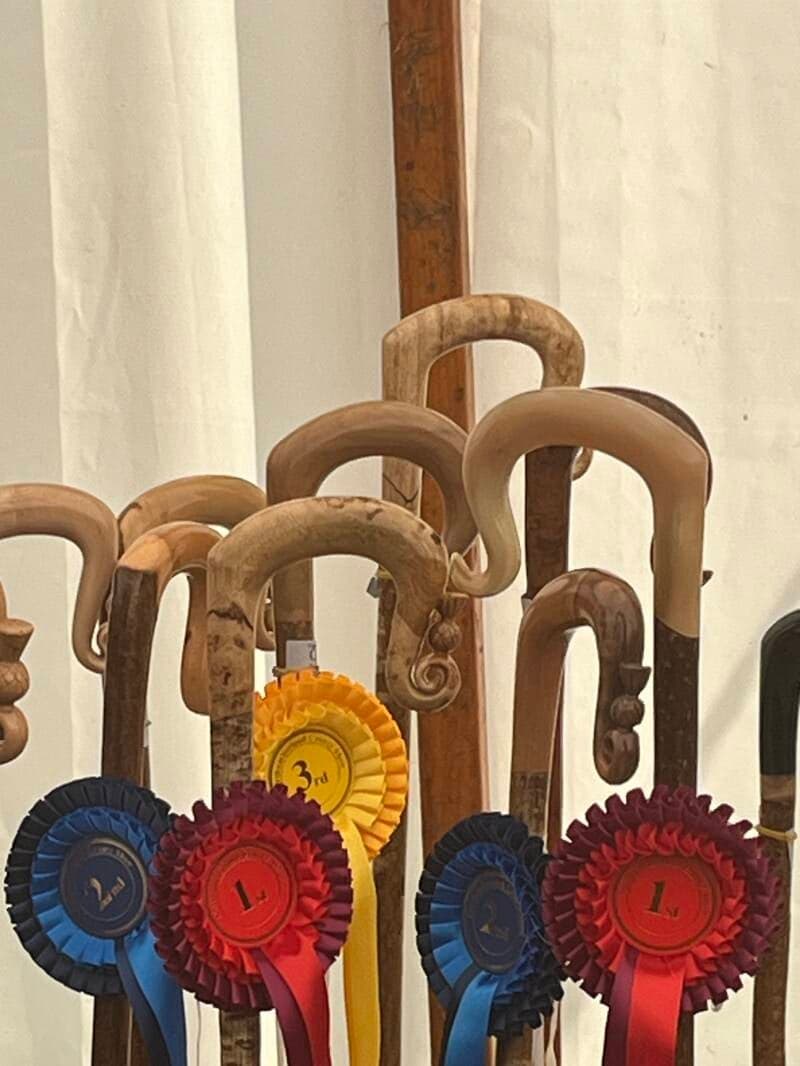
A simple rounded knob head, often turned from wood or topped with antler. Clean, understated, and very comfortable to grip.
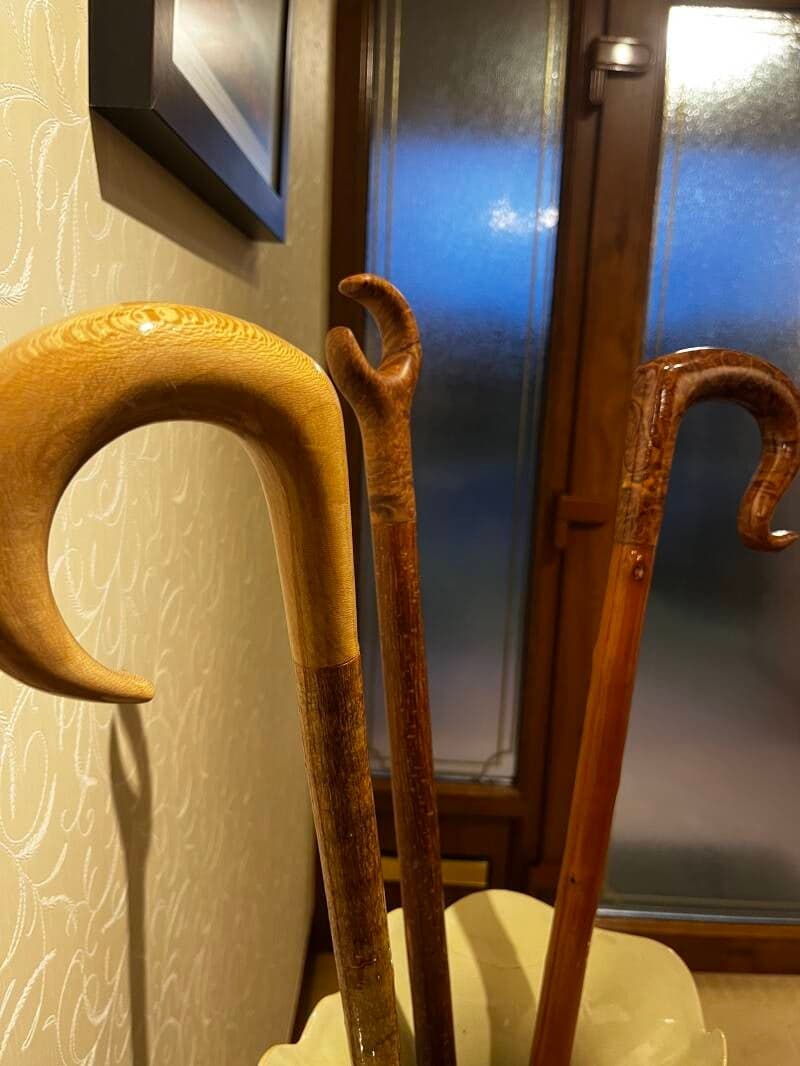
Similar to a shepherds crook but with a wider, flatter nose. Originally used at livestock markets. A beautiful dressed stick.
A taller stick for serious walkers and hikers. Often with an antler or wooden top and a spiked ferrule for rough terrain.
Sticks with hand-carved animal heads, birds, fish, or decorative motifs. The pinnacle of the stickmaker's art.
Every stick draws on three streams of material - a wood for the shank, a natural material for the handle, and a metal or horn collar to join them.
The main length of the stick. Cut from coppiced hardwood, left to season for a year or more, then straightened with heat before dressing.
A tough, flexible wood with a long grain. Excellent for staffs and hiking sticks.
A dark, dense wood prized for its character. The traditional Irish shillelagh wood.
Sweet chestnut — a durable wood with attractive grain. Slightly heavier than hazel.
The most traditional shank wood. Strong, straight-grained, and takes a beautiful finish. Grows abundantly in County Durham.
A dense, hard wood with a pale colour and fine grain. Makes a very strong, elegant shank.
Where the hand meets the stick. Shaped from natural materials - each one unique in colour, grain, and character.
Black buffalo horn — an increasingly popular alternative to ram horn. Dense, polishes beautifully, very strong.
Hand-carved from seasoned hardwood. Allows the maker to create animals, birds, and decorative forms.
Roe buck or red deer antler. Natural, textured, and distinctive. Each piece is completely unique.
The traditional crook material. Each horn is unique in colour — from pale cream to deep amber with dark veining.
Red deer stag antler — larger and more dramatic than roe buck. Excellent for thumbstick heads and knob tops.
The joint between handle and shank. Adds strength, holds the handle in place, and finishes the stick with a quiet detail.
Polished brass collar — the traditional choice. Develops a warm patina with age.
Polished copper collar — warm toned, develops a distinctive green patina over time.
A collar turned from horn — a more subtle, natural-looking joint between handle and shank.
Bright nickel silver collar — a clean, contemporary look.
Every stick takes months of patient work. Here’s the shape of it.
Hazel, holly, chestnut or ash is cut in winter - when the sap is down - and stacked to season. Depending on the wood, that can be a year or more before it’s ready for the bench.
Shanks are heated gently, clamped in a straightening jig, and left to cool. A knowing eye turns a kinked hazel branch into a true, strong stick.
Horn is boiled, pressed, and shaped over a former. Antler is selected for its curve and cut to fit. Wood handles are carved by hand - sometimes into animals, birds, or decorative forms.
The handle is bonded to the shank through a collar, the ferrule is fitted to the foot, and the whole stick is sanded, oiled, and polished. The maker’s initials go on last.
A well-made stick will last a lifetime, and outlast several of its ferrules. A few small habits keep it in good health.